
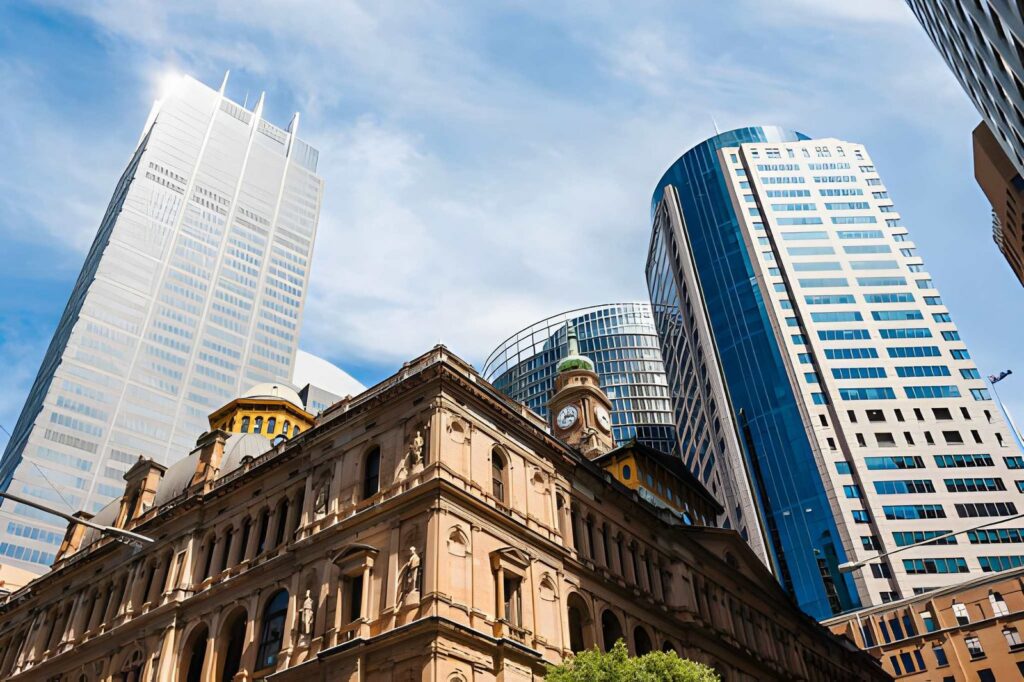
Common property, the lifts, lobbies, car parks, pumps and plant that nobody individually owns, is one of the biggest energy users in a large apartment building, and usually the largest controllable cost in an administration fund. Until recently, almost nobody measured it properly.
That is changing fast. High rise facility management has shifted more in the past three years than in the twenty before, pushed by cheap sensors, new compliance obligations, and investors who now want operational data instead of reassurance. This piece covers what that means for owners, strata committees, developers and asset managers running towers in Sydney, Melbourne and Brisbane.
What smart high rise facility management actually means now
Smart high rise facilities management means running a tower from live building data rather than from a monthly report. Sensors track energy use, water, air quality and equipment condition, a dashboard shows performance as it happens, and maintenance decisions follow the readings. Across National FM’s Group portfolio, this approach has delivered a 32% average reduction in energy use.
The gap between a metered building and an unmetered one is wider than most owners expect. Without sub-metering you cannot tell whether the car park, the pool plant or the chillers are driving the bill, which means every efficiency decision your committee makes is a guess dressed up as a recommendation. Our own Smarts and Sustainability program feeds sensor data into a live dashboard for every tower we manage. Across the Group, the sustainability work has returned an average payback of 1.2 years, abated 850 tonnes of CO₂ a year and saved clients $1.1 million annually.
Predictive maintenance has replaced the quarterly service report
Data is only worth collecting if it changes what you do on Tuesday morning.
Condition monitoring on lifts, chillers, pumps and switchboards picks up a failing component well before it stops working: rising motor current, longer run times, a valve cycling more often than it should. Car park exhaust fans running flat out because a CO sensor has drifted is the classic one. No fault appears on any report, and the quarterly bill quietly climbs.
The commercial pay-off shows up in capital planning. When you know the real condition and duty hours of plant, a 3 to 10 year CAPEX forecast stops being a depreciation schedule and becomes a genuine replacement plan. Fewer surprises for the owners committee. Fewer special levies.
EV charging has become a load management job
This is the clearest case of technology creating facility management work rather than removing it.
Under Part J9D4 of NCC 2022, car parks serving Class 2 apartment buildings need dedicated EV charging distribution boards: one per storey for every 24 EV spaces, and none below 10 spaces. Those boards must be sized to support a 7 kW (32 A) Type 2 charger at 100% of car spaces, with each circuit able to deliver at least 12 kWh between 11pm and 7am.
That requirement currently applies in NSW and Queensland, both of which stay on NCC 2022 until mandatory adoption of NCC 2025 in May 2027. Victoria moved to NCC 2025 from 1 May 2026, and that edition removed this specific Class 2 requirement, so a Melbourne car park upgrade needs to be assessed against whichever code applies to that project rather than assumed from NSW rules.
The clause that matters most on site is the requirement for a charging control system able to manage and schedule charging against total building demand. Someone has to configure that system and retune it as residents plug in. That is ongoing work. In practice that someone is the building manager, not the electrician who left after handover.
Carbon reporting has reached the building’s front door
Two things arrived at once. NABERS energy and water ratings for apartment buildings are open to any scheme with at least four apartments across two storeys, and they rate actual common property consumption rather than design intent. Meanwhile mandatory climate reporting under AASB S2 has moved into its second phase: Group 1 entities began reporting for periods from 1 January 2025, and Group 2 entities entered their first reporting period on 1 July 2026. Scope 3 emissions become mandatory in the second reporting year.
For institutional owners and funds, that turns building operating data into a reporting input. A landlord who cannot produce twelve months of verified common property consumption is a landlord who cannot complete a disclosure. Expect this in FM tenders long before it appears in legislation aimed at buildings themselves.
The new standard of care and what to ask for
Here is the honest version. Sensors on a building with no reliable sub-metering are money wasted, and we will say so. Fix the metering first, then instrument the plant that actually costs you something. A 22-storey residential tower with three lifts and a pool has maybe four systems worth watching closely, not forty.
The other half is people. A dashboard nobody reads is a screensaver. It is why National FM directly employs its building managers instead of subcontracting them, because the person who sees the alert should be the person accountable for acting on it, on site, in your building. Pairing that with smart building technology and sustainability programs is what the new standard of care looks like to us, and it is how we have run high rise and strata assets for more than 40 years.
Frequently asked questions
1. Does an existing high rise have to comply with the NCC 2022 EV charging rules?
No. NCC 2022 Part J9D4 applies to new buildings and new building work, so an existing tower is not required to retrofit EV distribution boards. It becomes relevant when a scheme upgrades its car park electrical infrastructure, because that work is assessed against the current code, which in Victoria is now NCC 2025 rather than NCC 2022. Most older towers retrofit by choice, driven by resident demand.
2. How long before smart building technology pays for itself?
Across National FM’s Group portfolio, efficiency and sustainability projects have returned an average payback period of 1.2 years, alongside a 32% average cut in energy use. Payback depends on the starting point, and it varies a lot. A tower with constant-speed pumps and no lighting controls will see faster returns than one commissioned in the past five years.
3. Does smart building technology only suit new towers?
No. Older high rise buildings usually offer the larger savings, because their plant is less efficient and their controls are often mis-set. National Facilities Management retrofits monitoring into existing towers across Sydney, Melbourne and Brisbane, normally starting with common property energy metering before adding condition monitoring on lifts, HVAC and hydraulic plant.
Start with one question for whoever manages your building today: ask for last quarter’s common property energy use, broken down by end use. If the answer is a folder of invoices rather than a breakdown, that tells you where your tower sits on this curve.
For a straight assessment of what smarter high rise facilities management would change in your building, contact us. No obligation, and we will tell you if the answer is to fix your metering first.