
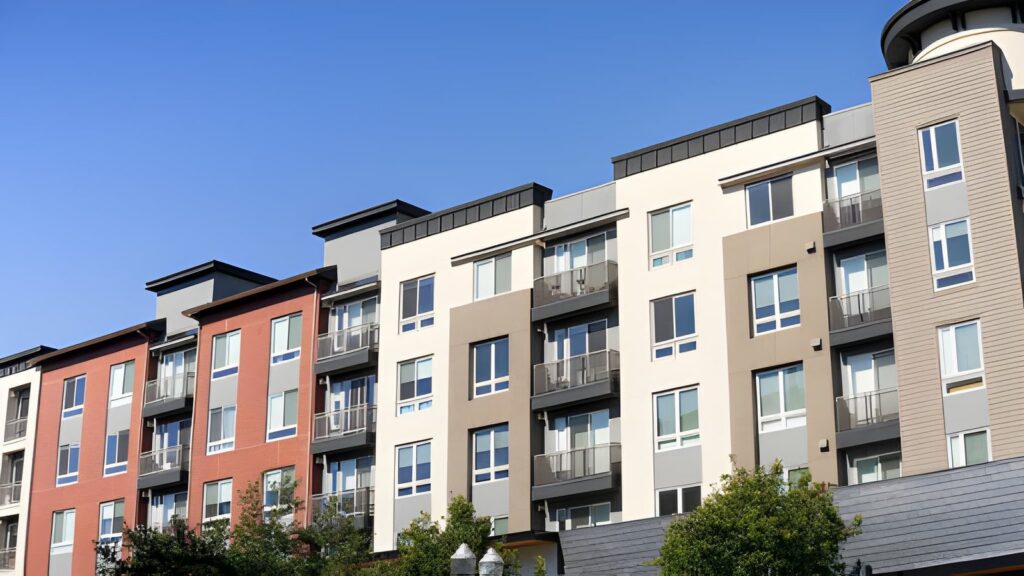
There’s a moment every Build to Rent operator eventually faces. A resident renews their lease, or they don’t. Multiply that decision across a few hundred apartments and you start to understand why Build to Rent facilities management is not the same job as managing a strata building down the road.
In strata, the facilities manager answers to an Owners Corporation. In Build to Rent, the facilities manager is working for a single institutional owner whose entire return depends on residents wanting to stay, paying on time, and telling their friends the building is worth living in. Get the FM model wrong in a BTR asset and you’re not looking at a difficult committee meeting. You’re looking at vacancy, churn, and a valuation that quietly slips every time a lease doesn’t renew.
The Boom Behind the Pressure
Australia’s BTR sector isn’t a niche experiment anymore. The national development pipeline has grown from roughly 39,300 apartments in mid-2025 to around 51,000 by early 2026, with the sector’s value climbing from $30.1 billion to $40.1 billion over the same period, according to the Property Council of Australia. The number of operating BTR apartments nationally is forecast to grow fivefold by 2029.
Sydney is leading that charge. New South Wales has overtaken Victoria as the top growth market for future BTR supply, with operating apartments in NSW expected to rise 740 percent by 2032. Brisbane’s pipeline is being shaped by strong housing demand competing against construction costs and a labour market stretched by infrastructure works ahead of the 2032 Olympics. Melbourne continues to build, though tax and regulatory settings have slowed new commencements compared to its earlier lead.
For developers and asset owners in Sydney, Melbourne, and Brisbane, this growth means more competition for the same pool of renters. A building’s facilities management model is fast becoming one of the clearest points of difference between a BTR asset that performs and one that quietly underperforms its business case.
Why BTR Facilities Management Has to Start at the Design Table
The biggest mistake we see in Build to rent facilities management is treating FM as something you appoint after practical completion, once the building already exists and the operational model is whatever the architects and builders happened to leave behind.
Good BTR facilities management starts before the first sod is turned. That means FM advisors sitting alongside the design team to review waste flows, traffic and loading dock logistics, CCTV and access control layouts, and back-of-house circulation, well before these decisions get locked into concrete and steel. It means OPEX modelling that tells a developer what the building will actually cost to run, not just what it will cost to build. It means population and move-in sequencing strategy, so a 300-apartment lease-up doesn’t turn into 300 simultaneous maintenance requests in week one.
Get this stage right and the building is set up to run efficiently from day one. Get it wrong, and every year of operation involves working around decisions that should have been made at the design table.
What Sets Proactive BTR Facilities Management Apart
Once a BTR asset is operating, the FM model needs to do several things well at the same time, and do them consistently across every tower in a portfolio.
1. Amenity management that earns its floor space: Rooftop gardens, gyms, co-working lounges, and resident lounges are expensive to build and expensive to run. A proactive FM partner treats amenities as an ongoing operational program, not a photo opportunity for the leasing brochure. That means cleaning schedules, booking systems, equipment servicing, and usage data all working together so amenities stay presentable and get used.
2. Centralised maintenance workflows: BTR assets, particularly multi-building platforms, benefit enormously from standardised maintenance processes across every site. A resident’s repair request should follow the same clear path whether they live in Sydney, Melbourne, or Brisbane. That consistency is what lets an operator scale a portfolio without service quality slipping as it grows.
3. A resident-facing service culture: Strata building management is largely about protecting an asset on behalf of owners who don’t live there. BTR facilities management is about protecting an asset by making the people who do live there want to stay. That requires directly employed, trained staff, not a rotating cast of subcontractors, because consistency and accountability are what build resident trust over time.
4. Technology integration that residents and owners both benefit from: Sensor-based monitoring, predictive maintenance, and live performance dashboards aren’t just back-office tools. They flag a failing pump before it floods a car park, they give asset owners real visibility into how a building is performing against forecast, and they reduce the reactive, disruptive repairs that frustrate residents.
5. ESG benchmarking that stands up to scrutiny: Institutional capital increasingly expects measurable environmental performance, not a sustainability statement on a website. Energy-use reduction, waste diversion, and water savings need to be tracked, reported, and improved year on year, because ESG performance is now a genuine factor in how BTR assets are valued and financed.
The Regulatory Backdrop Every BTR Owner Should Know
The commercial case for BTR in Australia has been reinforced by state-level tax settings, and the details vary by state in ways that affect long-term planning. NSW, Victoria, Queensland, and South Australia all offer a 50 percent land tax value reduction for qualifying BTR developments. NSW has extended its concession indefinitely for the 2026 land tax year onward, while Victoria’s concession runs for up to 30 years and Queensland and Western Australia cap theirs at 20 years. Queensland also requires at least 10 percent of dwellings to be offered under a discounted rent agreement to eligible tenants, a condition NSW and Victoria don’t currently impose.
None of this is facilities management in the traditional sense, but it shapes the operating conditions a BTR facilities manager works within, from affordable housing compliance to the long-term financial runway an owner is planning around. A facilities management partner who understands this landscape adds more value than one who only understands maintenance schedules.
The Cost of Getting It Wrong
Reactive facilities management shows up in a BTR asset in ways that are hard to miss and expensive to fix. Maintenance requests pile up and residents stop believing the “we’ll get to it” emails. Amenities that looked great in the marketing render start looking tired within a year. Online reviews turn from a leasing asset into a leasing liability. And because BTR value is built on rental income and occupancy, every resident who leaves because of poor building management is a direct hit to the numbers the asset was underwritten on.
None of this happens overnight. It happens gradually, through a hundred small operational decisions that either compound into a well-run building or into an underperforming one.
Building It Right From the Start
National Facilities Management has spent over 40 years helping developers and asset owners across Sydney, Melbourne, and Brisbane get building performance right, and Build to Rent is a natural extension of that experience. We bring FM advisory into developments at the design stage, not after handover. Our teams are directly employed, not subcontracted, so residents get the same trained, accountable people over the life of the asset. And our NFM Smarts platform gives owners live performance data and predictive maintenance insight across every building in a portfolio, so decisions are made on evidence, not guesswork.
If you’re planning a Build to Rent development, or you’ve inherited a BTR asset with an FM model that isn’t performing, the earlier that conversation happens the more options you have.
Get in touch
Talk to National Facilities Management about building a facilities management model that protects resident retention and asset value from day one. Contact us